
The Original Fascination
There are people who are called toward medicine because they want stability. There are people who are called toward medicine because they want prestige. And then there are people who are drawn toward it because, from the beginning, they are captivated by the mystery of the human body itself.
I was always the third.
Even as a child, I was fascinated less by the idea of “being a provider” and more by the architecture beneath life itself. I was drawn toward genetics, transformation, physiology, systems, beauty, identity and the invisible mechanisms that shape who we become.
When I was first exposed to genetics and deeper molecular biology, something in me became fully activated intellectually. For the first time, I encountered the kind of stimulation I had always imagined medicine would provide: expression, inheritance, biological individuality and the extraordinary complexity beneath human physiology.
But even then, I recognized another truth about myself. I did not want to spend my life isolated inside a purely academic or laboratory environment. The traditional paths presented to me felt binary: become a clinician, or disappear into research. Neither fully fit.
I respected science deeply, but I was never meant to exist only inside controlled academic structures, disconnected from real-world human transformation.
What I was searching for was integration.
I wanted the science, the physiology, the genetics, the systems thinking, the innovation and the human application—all existing together.
The Medicine I Imagined and the System I Entered
Medicine represented something sacred to me. When I was young, medicine represented intelligence. It represented discovery. It represented transcendence. So I pursued it relentlessly.
When I finally became a Physician Assistant, however, something unexpected happened: I realized almost immediately that what I loved about medicine and what the operational reality of medicine had become were not the same thing.
During my early experience in emergency medicine, I encountered a system shaped by repetition, bureaucracy, emotional exhaustion and care that was often reactive rather than transformative.
The science had not lost its meaning. But the system around it had become disconnected from the complexity that had drawn me there in the first place.
I was not disconnected from science. I was disconnected from the limitation of the system.
What Reignited
When I entered aesthetics and plastic surgery, I found myself working at an intersection that felt fundamentally different. Transformation was no longer theoretical. It was physical, psychological, personal and immediate.
The work brought together physiology, identity, precision, creativity, psychology and human optimization. It required technical judgment, but it also required an understanding of what people were truly asking for when they sought change.
Miami amplified that evolution. The city exposed me to ambition, advanced procedures, aesthetic innovation, luxury wellness, optimization culture and a broader vision of what health, performance and personal transformation could become.
But each environment would intellectually sustain me only until I understood the layer I was inside. Then the same question would return: what sits beneath all of this?
The Pattern Beneath the Pattern
By my early thirties, I had reached a difficult but deeply clarifying realization. I did not want to spend my life practicing medicine only through the traditional model of repeated clinical execution. What fascinated me was not repetition. It was systems.
What energized me was synthesis, interpretation, architecture, complexity, physiology, genomics, pattern recognition—the question of how human health could be understood differently.
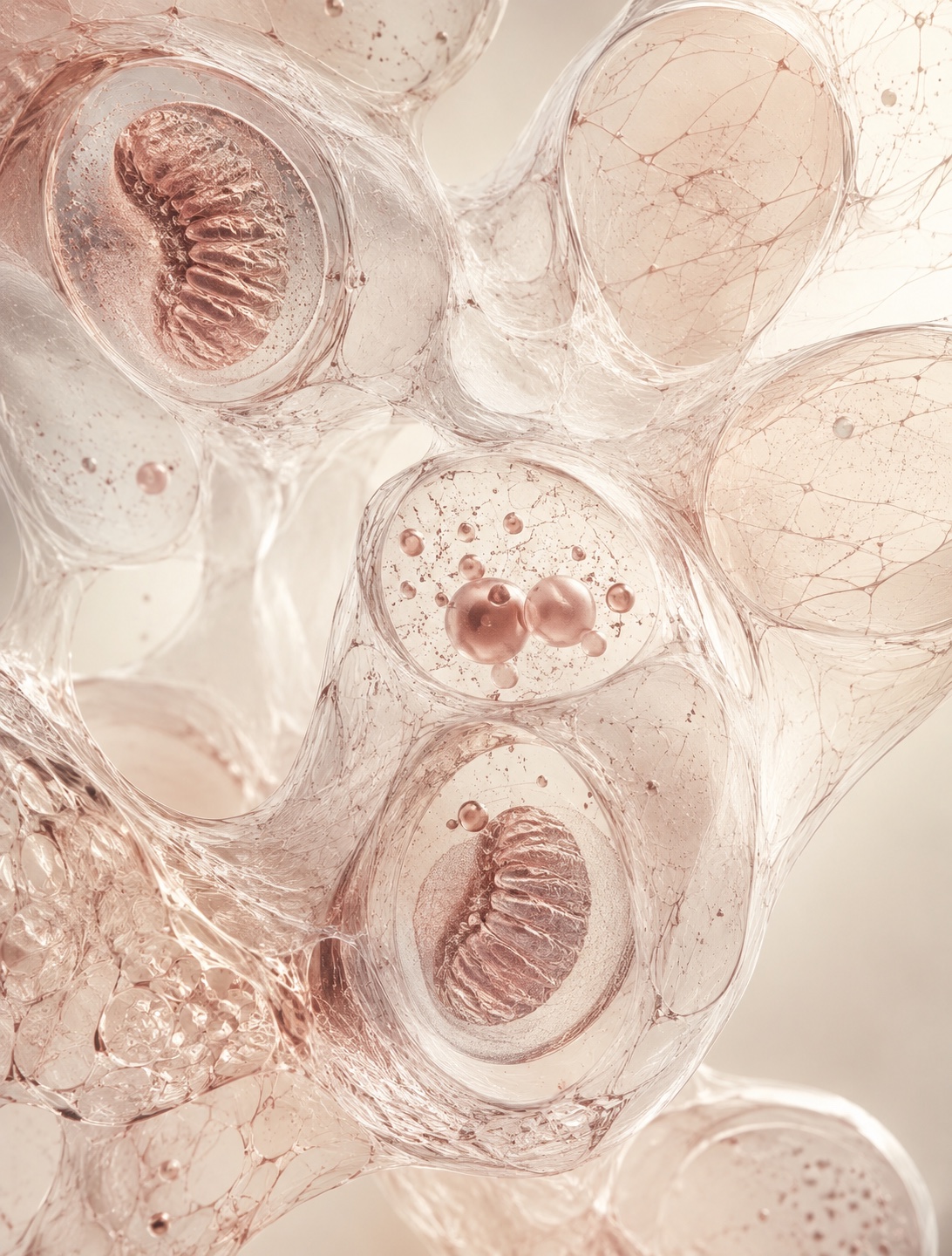
The deeper I moved into longevity, genomics, epigenetics, biomarkers, nervous-system regulation, metabolism and human optimization, the more clearly I saw the same underlying problem.
Modern healthcare collects extensive information—laboratory values, symptoms, diagnoses, imaging, wearable data, biomarkers, isolated clinical observations. Yet those signals are rarely organized into a coherent, longitudinal understanding of the person across time. The future of healthcare will not simply belong to diagnostics. It will belong to interpretation.
Modern healthcare does not fundamentally have a data problem. It has a translation problem.
Convergence
That realization eventually became the venture I am now developing—currently in stealth.
It did not emerge from a single sudden idea. It emerged from years of pattern recognition—years of observing fragmented healthcare, disconnected data and physiological complexity, and of recognizing that human biology does not behave as a collection of isolated categories, but as an interconnected system shaped by genetics, metabolism, nervous-system load, cognition, environment, behavior and patterns that unfold over time.
It became the point at which the different parts of my life finally occupied the same framework: my fascination with genetics, my clinical foundation, my experience across aesthetics and longevity, my systems-based thinking, my obsession with transformation, and my desire to build something larger than myself. The venture remains in private development—an intellectual framework for organizing physiological complexity into more meaningful, longitudinal understanding.
For the first time, what had previously appeared to be separate chapters revealed itself as one trajectory.

I was never meant only to practice medicine. I was meant to help reimagine how human physiology is interpreted—to build at the intersection of medicine, intelligence, longevity, transformation and future systems.
For years, what I interpreted as restlessness was actually a refusal to stop at the surface. What I interpreted as dissatisfaction was information. What appeared fragmented was slowly moving toward convergence.
What once felt like restlessness now feels like trajectory.
What once felt like dissatisfaction now feels like signal.
What once felt like fragmentation now feels like convergence.
The little girl who loved biology was never wrong.
She was simply looking further ahead than the systems around her could yet support.